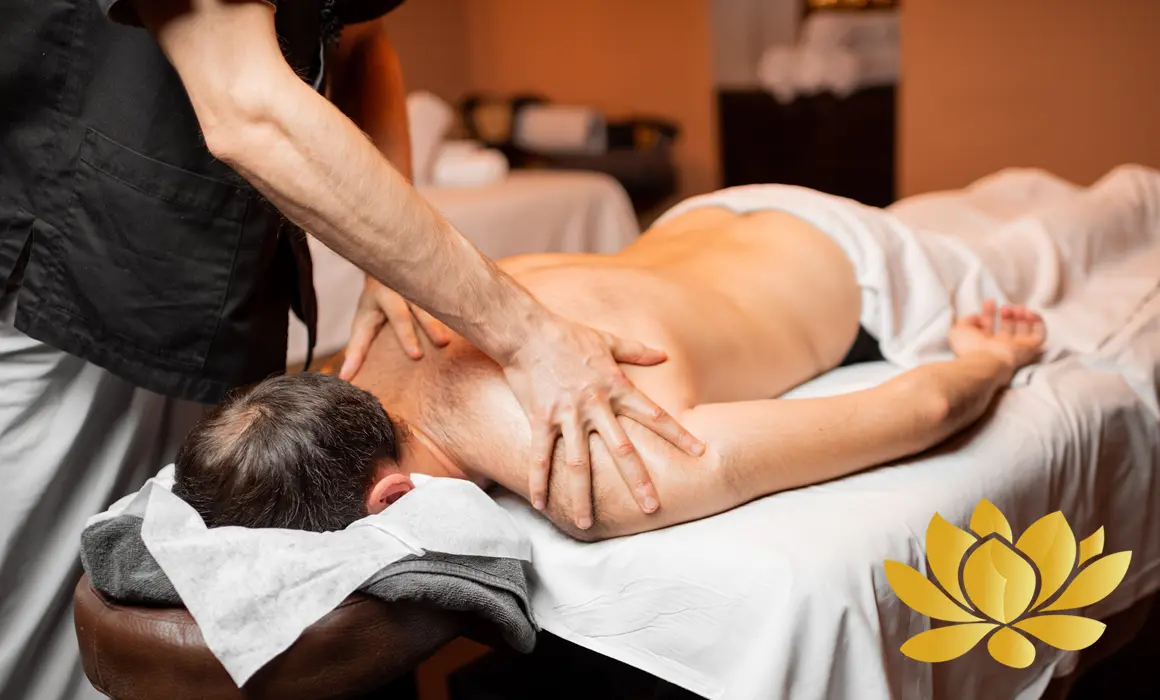















Duo Massage: Clarifying the People Technique and Booking
Duo massage is an ambiguous menu term. A provider may mean two therapists treating one client or two clients receiving separate appointments together. Ask how many clients, therapists, and tables are involved before comparing prices. The word duo alone does not establish the technique, room arrangement, or level of privacy.
Duo Massage at a Glance
| Feature | What to know |
|---|---|
| Main purpose | Resolve the meaning of duo before choosing a one-client or two-client arrangement. |
| Approach | For one client and two therapists, the team needs shared screening and coordinated communication. |
| Pressure | Each client or treated area needs an individual agreement |
| Clothing and privacy | Privacy depends on the room and number of clients |
| Products or equipment | Confirm products and equipment for each individual service |
| Duration and setting | Provider dependent; confirm the exact slot, hands-on time, and location |
| Important consideration | Do not assume that a friend or partner can answer health and consent questions for you. Separate clients should be able to disclose relevant information privately. |
Why Consider Duo Massage
Resolve the meaning of duo before choosing a one-client or two-client arrangement. The useful starting point is your reason for considering this particular service. Someone who wants quiet time may make a different choice from someone who wants focused attention to a sensitive area. Describe the experience you want in ordinary language, then ask how the provider would approach it. This makes a treatment name easier to translate into an actual appointment.
In the Philippines, the same service label can appear on menus with different techniques, room arrangements, and booking terms. Consequently, compare the details rather than choosing from a name or a photograph alone. The sections below explain the background, practical experience, potential benefits, and questions that help you decide whether the service fits your preferences. Where a health concern is involved, an appropriate clinical assessment should guide the decision.
History and Development
Duo is a commercial description used differently by different businesses, rather than one defined historical massage tradition. Confusion can arise when websites use it interchangeably with four hands, twin, or couples massage. A practical definition should identify the arrangement explicitly. This guide focuses on translating the label into a service you can compare and book with confidence.
Purpose and Who May Consider It
Consider your preferences in three practical areas: the kind of contact you enjoy, the position you can hold comfortably, and the reason you want the appointment. For duo massage, pay particular attention to number of clients, therapists, tables, rooms, and separate consent. Those details are more useful than being told that everyone is an ideal candidate. You can prefer a technique without assuming it will address every source of discomfort.
If your goal concerns pain or an ongoing symptom, describe it accurately and ask what assessment is needed. A therapist can discuss the service and its limits, while a qualified clinician can investigate a possible medical cause. If your main goal is relaxation, say that directly. You do not need to supply a medical-sounding reason to request a comfortable, respectful wellness appointment.
For example, two friends may search for duo massage expecting two individual appointments, while the business uses the term for two therapists working on one client. Both parties can misunderstand the booking without anyone noticing until arrival. Request a written description with client count, therapist count, tables, and room arrangement. That simple record is more useful than repeating the label.
Clarifying the Number of Clients and Therapists
For one client and two therapists, the team needs shared screening and coordinated communication. For two clients, each person needs an individual consultation and the right to request different pressure or stop independently. A shared room does not combine two people's consent or health histories. Ask which arrangement is offered before discussing any optional additions.
Ask the receptionist to describe the arrangement without using the word duo. One client with two therapists, two clients in a shared room, and two clients in separate rooms are distinct services. Once the arrangement is clear, discuss the actual massage method, products, coverage, and privacy for each person. A similar package name cannot resolve those details.
Before unfamiliar contact begins, ask the practitioner to explain what you may feel and how to signal an adjustment. Simple feedback such as lighter pressure, more support, or please skip that area is enough. The plan should remain flexible throughout the session. You can agree to one part of the treatment and decline another without having to justify a personal preference.
Potential Benefits and What the Evidence Says
Comfort and the Personal Experience
People may value bodywork for a quiet break, attentive contact, or a temporary sense of greater comfort. These are reasonable experiences to discuss, but your response may differ between appointments and from another client’s response. For duo massage, think about the outcome that actually matters to you. An enjoyable appointment does not need to be described as a permanent medical correction to be worthwhile.
Evidence and Realistic Expectations
The word duo does not establish a clinical advantage. Sharing a time slot or using two therapists may change the experience and price, but it does not guarantee better recovery or treatment of a condition.
When you hear a health claim, ask what outcome is meant, how it was measured, and whether the explanation applies to this specific method. A personal recommendation can describe an experience, but it cannot establish that a treatment works for everyone. Likewise, a research finding from a different technique or patient group should not be presented as a guarantee about the appointment you are booking.
Risks Precautions and When to Seek Advice
Do not assume that a friend or partner can answer health and consent questions for you. Separate clients should be able to disclose relevant information privately.
Share relevant injuries, recent procedures, skin concerns, allergies, and medicines or conditions that may affect safe treatment. You do not need to disclose unrelated personal information, but the practitioner needs enough detail to identify limits within their scope. If you are uncertain about suitability, ask a qualified health professional before proceeding. Avoid relying on a routine consent form as a substitute for a real conversation.
During the session, report sharp pain, an uncomfortable reaction, or a position that feels wrong. You can ask the therapist to stop immediately. Afterward, concerning or worsening symptoms need appropriate medical advice. The practitioner should take that feedback seriously and explain how to contact the business if you need to report a problem after leaving the appointment.
What to Expect Before During and After
Before the Session
Confirm the exact service, appointment length, total price, and therapist availability before you pay. Ask whether consultation and changing time reduce the hands-on portion of the slot. Then discuss number of clients, therapists, tables, rooms, and separate consent. If access, communication, or privacy needs affect your visit, explain the specific arrangement you require and ask the provider to confirm that it can accommodate it.
During the Session
For a shared two-client appointment, each person should speak directly with their own therapist. Different pressure, products, or conversation preferences can coexist in the same booking if the provider can accommodate them. Nobody should be expected to copy a partner’s preferences or provide consent on their behalf. Ask privately if a sensitive issue needs discussion away from the other client.
The provider should protect privacy and explain any change in position or coverage. Agree on the areas to include and those to avoid. Consent remains an ongoing conversation throughout duo massage. An earlier booking or a familiar routine does not prevent you from changing your mind once you experience the pressure, products, or position.
After the Session
Confirm the outcome of each booking separately, including any change in duration or charge. If one person wants another visit, that does not obligate the other to purchase a package. Shared convenience can be useful, but decisions about future treatment, personal information, and feedback should remain with the individual receiving the service.
Give the therapist a brief account of what felt helpful and what you would change. Keep your usual plans realistic if you feel tired or uncomfortable, and seek advice for an unexpected or persistent problem. There is no universal appointment frequency that suits every client. Decide whether to return based on your experience, your goals, and any relevant clinical guidance rather than pressure to commit to a package.
How Duo Massage Compares with Related Options
| Option | Main consideration |
|---|---|
| Duo Massage | Resolve the meaning of duo before choosing a one-client or two-client arrangement. |
| Four Hands Massage | Four hands massage involves two therapists working with one client during the same appointment. |
| Twin Massage | Twin massage is a provider-dependent term that needs clarification. |
For a fuller explanation, read the four hands massage guide. Compare the actual appointment details before deciding which approach fits your preferences.
For a fuller explanation, read the twin massage guide. Compare the actual appointment details before deciding which approach fits your preferences.
There is no need to rank these options as universally better or stronger. Compare the contact, positioning, products, and purpose you prefer. If you want a familiar experience, ask how closely the provider follows the description you have read. If you want something different, identify the feature you want to change rather than choosing a more dramatic treatment name.
Choosing a Practitioner and Planning a Philippine Appointment
Ask about training and practical experience in duo massage, including how the practitioner screens clients and adapts a session. Qualifications should relate to the service itself. If a specific certification is advertised, ask who issued it and how it can be verified. Avoid assuming that a foreign credential, an impressive title, or years in business automatically establishes the right training for your circumstances.
Check the facility’s cleaning routine, linen arrangements, privacy, and communication. For a home or hotel appointment, confirm travel coverage, equipment, arrival procedure, and any additional charge. Ask whether the accommodation permits outside providers and whether there is enough suitable space. These details make a difference to the experience even when the technique itself is familiar.
Request the final price in Philippine pesos and clarify deposits, cancellation terms, rescheduling, and late arrival. Service menus and availability can change, so confirm them directly rather than relying on an old blog price. If the provider cannot meet an important preference, compare another appointment before paying. A clear decision made in advance is easier than resolving a misunderstanding during the session.
For a Wellnessville appointment, compare the massage services, review the therapist information, and contact Wellnessville to confirm your preferred service and current availability.
Key Takeaways and Related Reading
- Resolve the meaning of duo before choosing a one-client or two-client arrangement.
- Confirm number of clients, therapists, tables, rooms, and separate consent before choosing the appointment.
- Do not assume that a friend or partner can answer health and consent questions for you. Separate clients should be able to disclose relevant information privately.
- Keep expectations realistic, communicate throughout, and judge the service by the outcome that matters to you.
For practical preparation, see what to expect at your first massage. Use the guide to organize your questions, then confirm the current service with the provider you plan to visit.
Frequently Asked Questions
Can two friends book duo massage without choosing the same technique?
Ask whether the provider offers two separate services under the same booking and can staff both techniques. Confirm each person's duration, price, and preferences. Some businesses sell a fixed package, while others allow individual choices. Friendship or a shared room does not require identical treatments.
Can the practitioners introduce themselves before I change?
Request an introduction and a brief discussion of the plan before changing or beginning treatment. Confirm the assigned people and how they will communicate. If the provider changes the team, you can ask about the new arrangement and consider whether the appointment still meets your preferences.
Can the booking confirmation state the number of clients and therapists?
Yes, ask for those details in writing along with the date, duration, room arrangement, and complete price. A written description is particularly useful when businesses use similar package labels differently. Keep it with the payment terms so everyone can refer to the same arrangement.
What if my companion needs a different start time?
Ask whether the bookings can be staggered and whether that changes the room or package price. Some arrangements depend on simultaneous staffing. Confirm both schedules before paying, and decide where the earlier or later person can wait without interrupting private consultation or treatment.
Can I discuss personal information without the other client present?
Ask for a separate conversation or confidential screening process. Sharing a booking does not require sharing a health history. If the room does not allow private discussion, contact the practitioner in advance and confirm a workable alternative rather than leaving the issue until treatment begins.
Try Our Massage Packages
Some of Our Massage Therapists