














Jaw Massage for TMJ Pain: What to Ask Your Dentist First
People often search for jaw massage for TMJ pain because their cheek aches or their jaw feels tired after clenching. TMJ is the jaw joint itself; TMD is the term for disorders involving the joints or chewing muscles. Pain can also come from teeth or other structures. A dentist or clinician is the right first stop for persistent pain, locking, a change in your bite, or a problem that affects how you eat.
Describe a day in the life of your jaw
Tell the dentist whether the discomfort appears during chewing, after waking, when you yawn, or late in a long conversation. Which side is involved? Does the jaw actually stop moving or just make a sound? A painless click is common and often needs no treatment. The National Institute of Dental and Craniofacial Research guide to TMD explains the distinction and why conservative, individualized care matters.
What an appointment can teach you about jaw position
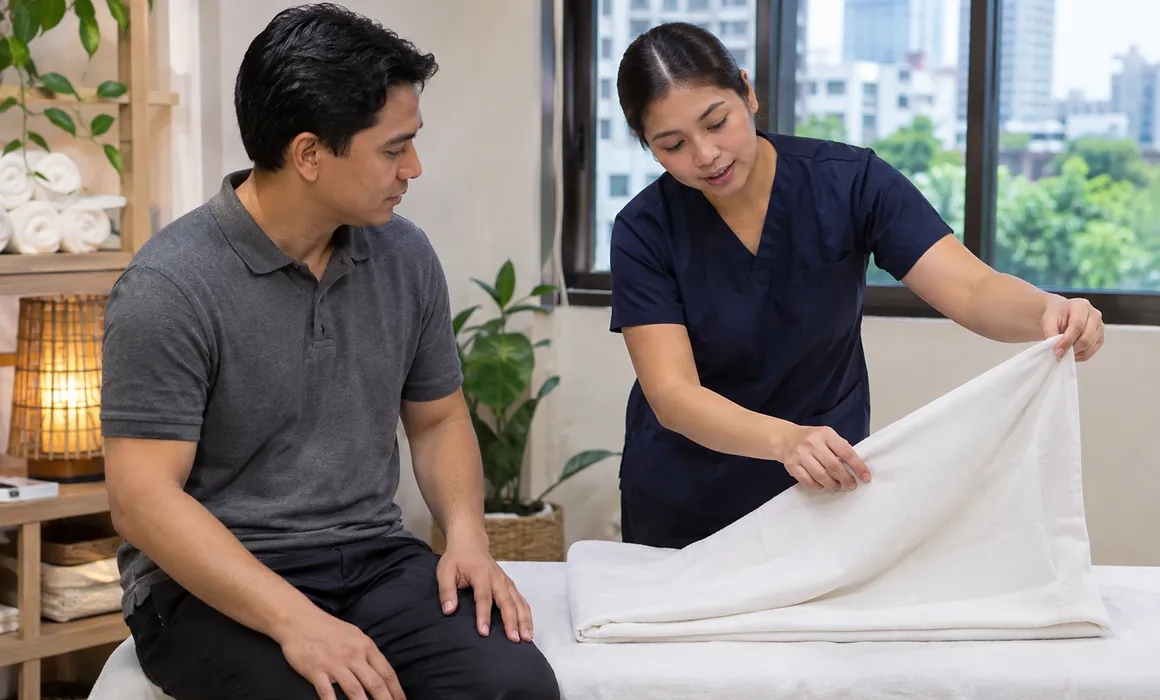
Sometimes a client identifies an unwelcome pressure with a useful observation: they were keeping their teeth apart and relaxed while sitting up, then began clenching as soon as they lay on a face support. That information can guide a change in the support or position. It does not diagnose a jaw disorder, prove a particular muscle is at fault, or make treatment inside the mouth appropriate. Those are separate questions.
Bring your dentist an everyday observation if you notice one. Perhaps a change occurs only when chewing a particular texture, opening wide, or waking in the morning. Leave the jaw in its ordinary range instead of repeatedly testing where it clicks. The detail you remember about daily life can be much more useful at an assessment than a report that a practitioner pressed on various points until one hurt.
Know which person can answer the unresolved question
Reception can usually tell you who is scheduled, how long a room is held, and what equipment is available. The practitioner can explain the movements they use, their training, and how they would adapt the proposed appointment. The clinician who knows your health situation can address medical suitability. One friendly person may be willing to answer everything, but willingness alone does not give them the information each decision needs.
A dentist can assess teeth, bite changes, and possible TMD. A physical therapist working with the dental or medical team may use a prescribed plan for jaw function. A general massage provider can honor a request to leave the face untouched. Being clear which service you need avoids an unexpected proposal to work inside the mouth.
Try asking a provider what they would do if an important restriction were unclear. A careful answer might involve delaying direct contact, asking you to check with your care team, or suggesting that the service is outside their scope. A blanket promise followed by no practical explanation is less useful, even if it sounds reassuring on the phone.
Distinguish external contact from work inside the mouth
A light touch on the outside of the cheek is a different service from any technique performed inside the mouth. The second involves different skills, hygiene arrangements, professional scope, and specific consent. Do not assume a general spa offers it. Never agree to an unexplained attempt to force the mouth open, realign the jaw, or make it click. If a clinician recommends manual therapy, ask who should provide it and which approach is intended.
Match the jaw question to its setting
| Situation | What to do | Why it matters |
|---|---|---|
| Painless clicking | Mention it to your dentist if concerned, without trying to produce a click for the spa. | Sound alone often needs no treatment. |
| Jaw locking or change in bite | Arrange dental or medical assessment. | The right decision depends on the cause and the effect on function. |
| Uncomfortable face support | Ask to lift your head and try a different supported position. | A position can cause discomfort even when no facial work is planned. |
| A request for internal work | Clarify the purpose, provider qualifications, procedure, and consent independently. | A general massage booking does not imply permission for work inside the mouth. |
Consider what gets compressed when you lie down
Somebody looking at a treatment table sees a broad, flat surface. Somebody lying on it can feel every place where an ear, chin, elbow, hip, accessory, or device meets that surface. An area can become uncomfortable without receiving any massage at all. Before choosing where hands-on work will happen, check which regions the position itself will load.
Notice where your teeth and lower jaw settle when you move from an upright chair to the face support. If the cushion makes your jaw feel pushed backward, return to sitting before judging the sensation. That comparison helps you describe a setup problem without allowing anybody to use it as a test for a jaw disorder.
A useful comparison can be as simple as sitting upright, resting briefly on one side, and choosing the orientation that gives the relevant area enough room. Use only movements that are appropriate for you and your care plan. If you need to get up or change position independently, make sure supports do not block your usual way out.
Look at the position of the jaw during the whole visit
Pressure from a face support beneath the chin can be the part that troubles you, even if you never request facial work. Try the support while you can give feedback and ask to lie on your side or sit upright if it shifts the jaw uncomfortably. You can keep the entire face off limits. The head massage guide explains why it pays to ask which areas a service includes.
A click that sounds alarming but does not hurt
Somebody notices a click at breakfast and asks a massage therapist to make the two sides of the jaw sound the same. There is no pain or change in function. A second person has a quieter jaw but can no longer open it enough to eat an ordinary sandwich. Sound alone would put the two situations in the wrong order. A dentist can evaluate the loss of function; a painless sound alone does not create a reason for a corrective spa procedure.
- What if I only want my shoulders worked on and my face left alone? We can name the shoulder region and choose a position without pressure against your chin or cheek.
- How can I describe locking without trying to make it happen again? Tell your dentist when it happened, whether the mouth stuck open or closed, and how long the episode lasted.
- Could an outside cheek massage become work inside the mouth? It should never change in that way by assumption. Internal work needs an appropriate professional, a clear purpose, and specific consent.
When you’re describing jaw pain, pointing to a temple, a tooth, or an area in front of the ear is useful, but the place you point to does not automatically reveal the cause. If you have a dental assessment coming up, saving your questions for that appointment can be more valuable than booking a massage first and trying to interpret what pressure changes.
Build a short timeline before looking for an explanation
Keep observation and interpretation in separate sentences. “My fingers tingled after the last few laps” tells a clinician what happened. Adding that it must have been caused by a particular muscle can steer the conversation before anyone has assessed it. A therapist can use the same factual account to decide what should be omitted from a wellness visit without trying to make a diagnosis.
The time a jaw symptom appears may be more informative to your dentist than the loudness of a click. Record whether chewing stops, yawning becomes difficult, or discomfort carries into a conversation. Avoid repeatedly opening to the limit just to hear the noise or demonstrate it to the massage practitioner.
If something needs urgent medical attention, do not delay seeking it to finish a record. For a nonurgent recurring question, a small note made when you first notice the problem can be more reliable than trying to recall a whole month during a brief appointment.
Decide what to carry forward to a different practitioner
A familiar provider may remember that you like a particular pillow or prefer a quiet start. A new practitioner sees only what has been communicated and what you explain today. Give them the useful action in plain language. A note such as “ask before changing the position of my arm” is more transferable than a reference to what another therapist always does.
If a previous appointment ended with painful clenching in a face cradle, give the next therapist the concrete preference you learned. You might ask to sit or lie on your side and to leave the face untouched. That note need not claim the cradle caused the underlying jaw symptoms.
Ask whether the provider can record the practical preference in your booking and whether it will be available at a different branch or during a home visit. Even when a note exists, restate any important medical restriction directly. Old notes may retain a preference or treatment detail that no longer applies after a change in health or comfort.
Keep your dentist’s plan separate from your wellness preferences
If exercises or a device were prescribed, follow the clinician’s instructions. A spa should not change your bite, tell you to discard a guard, or decide what caused your symptoms. For rehabilitation, explore the difference between massage and physical therapy. If you want relaxation with no facial or jaw contact, describe that when you check service availability.
Use one everyday task to explain the difference
The person listening may not share your occupation, sport, or body mechanics. A simple demonstration made within an easy, comfortable range can tell them more than a technical label. You could show where a strap rests or describe how you open a heavy door. There is no need to repeat a painful motion to prove that you have experienced it.
Instead of testing how wide the mouth opens at a spa, tell your dentist about a task that no longer goes as usual: taking a bite of a sandwich, brushing back teeth, or talking through a meeting. These descriptions can guide an assessment without asking you to repeatedly provoke the symptom.
Choose an activity that is familiar enough for you to notice a genuine change. A musician might pick one ordinary part of setting up an instrument. Someone with a difficult shoulder might describe putting an arm into a sleeve. The question is how the activity fits into your life, not how much discomfort you can tolerate during a test.
Wording for the dental appointment
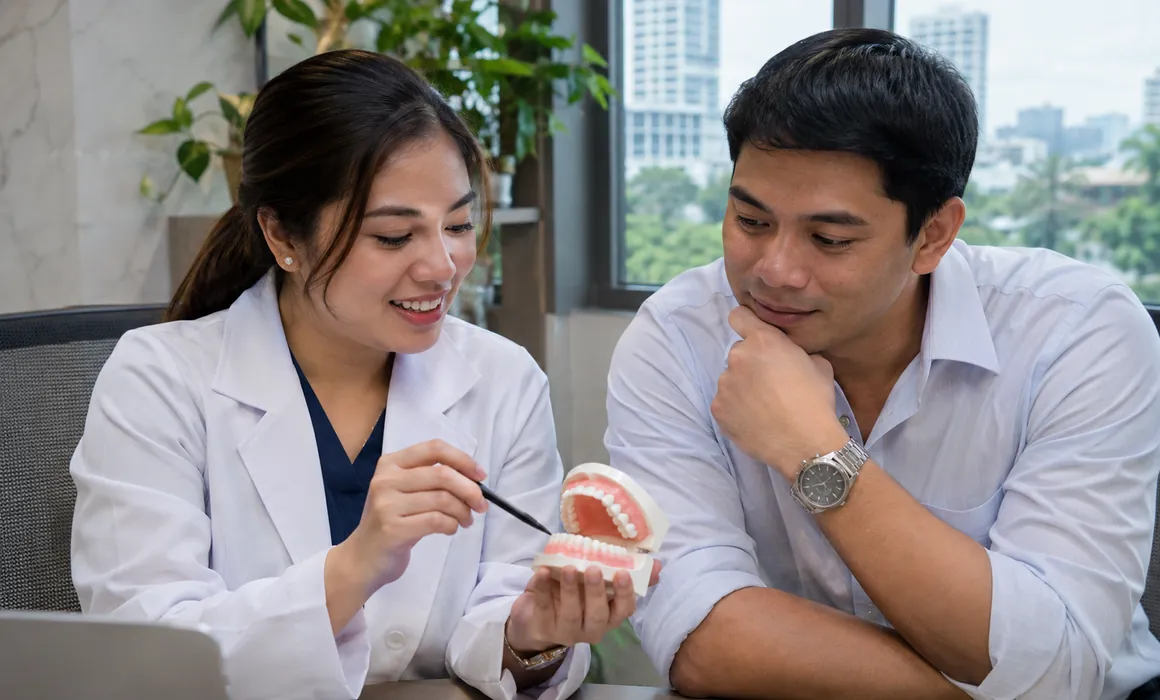
My jaw symptom appears when I chew or open my mouth in a particular way. Should I be assessed for a jaw joint, muscle, or dental problem? If manual therapy is appropriate, what type do you mean, and which qualified professional should provide it?
At a separate wellness visit, use a much simpler instruction if you want your face left alone. The dentist needs the symptom history to assess it. A spa practitioner may only need the restriction on contact and the position that lets you rest comfortably.
Frequently Asked Questions
Is the jaw joint located only on the side that hurts?
No. There is a temporomandibular joint on each side. The location of symptoms does not by itself identify their cause.
Can a spa fit me for a night guard?
See a dentist for advice about oral appliances and how they fit.
Should I hand my retainers to the therapist if I take them out?
Keep your own clean case nearby. Follow your dental team’s instructions about when to wear retainers.
Should I book a massage for a jaw that is stuck open?
Seek urgent professional assessment. Do not let someone at a spa try to put the jaw back.
Is an orofacial pain specialist the same as an orthodontist?
They have different areas of practice. Ask your dentist which specialty fits your specific question about pain or jaw function.
Try Our Massage Packages
Some of Our Massage Therapists