

This article explains nuru massage terminology as terminology rather than a recognized promise of treatment. The same label can be used inconsistently in marketing, cultural discussion, or sexual contexts. A name alone does not establish professional scope, medical evidence, consent, or legal status. Nuru is used in contemporary marketing for a form of slippery gel-based body contact. The product or label does not establish a recognized clinical treatment, medical benefit, or the legal status of a particular activity.
At a Glance
| Question | Key distinction |
|---|---|
| What the label establishes | A term being used, not a standardized clinical qualification |
| Traditional context | Cultural associations require careful explanation |
| Evidence | Evaluate the specific health claim and outcome |
| Consent | Specific, voluntary, informed, and ongoing |
| Healthcare | Symptoms require appropriately qualified assessment |
Why Clear Terminology Matters
The central distinction is between nonsexual soft-tissue massage, sexual activity, and clinical healthcare. They involve different purposes and responsibilities. This educational discussion does not describe sexual techniques. It addresses how vague language can obscure a claim, why consent must concern a specific activity, and why an anatomical or cultural term does not establish medical competence.
A word can carry different meanings in a cultural discussion, an advertisement, and a clinical conversation. Those uses should not be collapsed into one definition. When reading an article, first identify what activity or claim is actually being discussed. If the description remains ambiguous, the correct response is to acknowledge that uncertainty rather than fill the gap with an assumption about safety or effectiveness.
Search results can place educational explanations alongside commercial material and personal accounts. Their proximity does not establish that they have equal evidential value. A page may be useful for understanding how a phrase is used while offering no reliable support for its health claims. Separate the meaning of the term from the quality of the explanation attached to it.
An anatomical term does not turn an activity into healthcare. Likewise, words such as holistic, natural, traditional, or therapeutic do not establish that a person can diagnose a condition. The relevant questions concern the actual claim, the evidence that supports it, and the qualifications required for that particular clinical responsibility. A familiar name cannot answer those questions on its own.
History Cultural Context and Modern Usage
Modern uses of these terms can combine cultural references with commercial language. A historical or spiritual association does not establish that a contemporary activity follows an unchanged tradition. It is more accurate to explain the particular meaning being discussed than to invent a single founder, date, or universal treatment sequence.
Cultural context deserves accurate and respectful treatment. That includes acknowledging variation, avoiding invented origin stories, and distinguishing a tradition from later marketing. A modern commercial description should not be presented as the single authentic expression of an entire community. Nor should respect for a tradition require accepting every medical claim associated with a contemporary label.
A historical account can explain why certain language became meaningful without proving a biological mechanism. These are different tasks. A writer discussing heritage should identify the tradition carefully; a writer making a health claim needs evidence relevant to that outcome. Combining the two into a dramatic healing story can hide uncertainty that a reader needs to understand.
Purpose and Appropriate Scope
Understand ambiguous language without treating it as a standardized clinical method.
This explanation is intended for adults evaluating language and health information. It does not provide sexual instructions, characterize a person’s preferences, or assume that an identity predicts behavior. Someone may encounter a term in ordinary conversation and want a clear definition. That informational need can be met without turning the explanation into a recommendation for an activity.
Personal meaning, emotional experience, sexual activity, and clinical treatment are distinct subjects even when a discussion mentions more than one of them. A person may describe a meaningful experience without establishing a medical effect. A clinician may assess a symptom without endorsing the language used to describe an unrelated experience. Keeping the purposes clear helps prevent category errors.
Distinguishing Massage Sexual Activity and Healthcare
| Category | What defines it |
|---|---|
| Nonsexual massage | Manual bodywork with an agreed professional scope |
| Sexual activity | A different purpose that should not be disguised by vague wellness language |
| Clinical healthcare | Assessment and treatment within an appropriately qualified professional scope |
A distinction between categories is not a judgment about a person. It is a way to describe responsibilities accurately. A claim that an activity is relaxing does not make it medical treatment. Similarly, an assertion that a practice is therapeutic does not remove the need for clear consent or establish a qualification. The description should make the category more understandable rather than deliberately obscure it.
Privacy and secrecy are also different ideas. Privacy protects personal information and a person’s ability to make decisions without unnecessary exposure. Secrecy should not be used to avoid an honest explanation of an activity, suppress a concern, or discourage access to healthcare. A discussion that treats silence as proof of professionalism is missing the point of informed decision-making.
Potential Benefits and What the Evidence Says
There is no basis for assuming that a loosely defined label proves treatment of infertility, hormonal imbalance, trauma, or a medical condition. A personal experience, cultural explanation, and clinical research finding are different kinds of information.
To evaluate a health claim, identify the proposed outcome first. Relief of a temporary sensation, treatment of a diagnosed condition, and a lasting change in health are different outcomes. Evidence for one does not automatically support the others. The population studied, comparison used, duration of follow-up, and method all affect what a result can reasonably establish.
Personal accounts can communicate how someone felt, but they cannot reliably separate the activity from expectations, attention, natural variation, or other changes happening at the same time. This does not mean that an experience is unimportant. It means the account should remain an account of that person’s experience rather than become a promise about what will happen to everyone else.
Strong claims about fertility, hormones, immunity, or trauma require evidence directed at those specific subjects. A general statement about relaxation cannot supply that evidence. If an explanation shifts between outcomes without acknowledging the change, read it cautiously. Ask whether the conclusion actually follows from the information presented rather than from the confidence of the wording.
Risks Precautions and When to Seek Advice
Pain, injury, bleeding, distress, or a sexual-health concern should be discussed with an appropriately qualified clinician. A wellness label should not delay needed care.
Consent should be specific to the activity and remain voluntary throughout. Agreement to one kind of contact is not agreement to another. A person can change their mind, decline an element, or stop. Pressure, embarrassment, payment, a relationship, or a cultural explanation should not be used to override that decision. Clear language makes the boundaries easier to understand.
A person experiencing distress should be able to seek suitable support without being told that discomfort proves a process is working. Claims about emotional release can become misleading when they discourage someone from taking a concern seriously. A health or mental-health professional can help assess symptoms and discuss appropriate options within their scope, without requiring acceptance of a wellness explanation.
Before During and After a Health Information Conversation
Before the Conversation
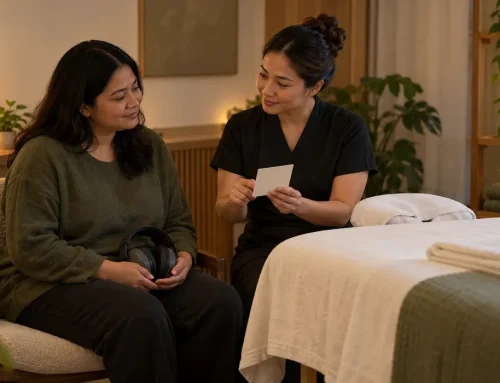
Write down the actual question or concern in ordinary words. If there is a symptom, note when it began and what has changed without trying to diagnose it from an internet description. Distinguish a request for a definition from a request for medical advice. That distinction helps the person responding explain what they can address and where more specialized assessment may be useful.
During the Conversation
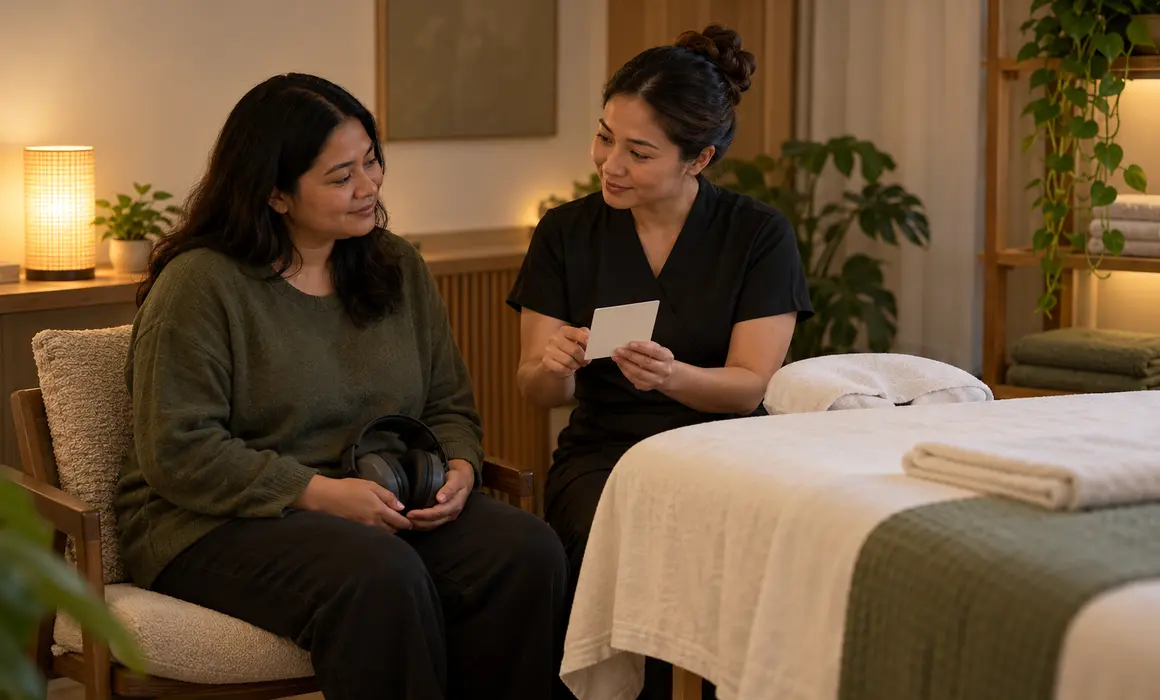
Ask for unfamiliar terms to be explained and for uncertainty to be stated clearly. You can request a private discussion and ask why a question is relevant before sharing sensitive details. If an answer changes the subject from your concern to a broad promise of healing, return to the specific question. You do not need to adopt someone else’s vocabulary to describe your own experience.
After the Conversation
Keep the information that answers your question and identify any issue that remains unresolved. If a medical concern persists, follow up with an appropriate clinician rather than repeatedly searching for a more reassuring label. Personal notes can help you remember the discussion, but they should not become a substitute for assessment or a reason to ignore a new or worsening symptom.
Comparing Labels Without Confusing Their Meaning
Compare the actual descriptions rather than ranking terms by how traditional, exclusive, or dramatic they sound. A useful explanation names its subject, identifies its limits, and distinguishes facts from interpretation. A weak explanation relies on impressive language while leaving the activity or claimed outcome unclear. The same standard applies to familiar and unfamiliar terminology.
For a clearly described example of nonsexual bodywork, read the Swedish massage guide. It illustrates why technique, contact, and expectations should be named explicitly rather than inferred from an ambiguous label.
Personal Information and Privacy
Sensitive information should be shared for a clear reason, with an understanding of who will receive it and how it will be used. A person can ask why a question is necessary and request a private conversation. Curiosity, an online discussion, and a clinical consultation involve different information needs. Do not assume that encountering an unfamiliar term creates an obligation to disclose personal experiences or preferences.
When reading online material, avoid posting identifying health details simply to obtain a definition. A general explanation can usually address terminology without a personal history. If the issue concerns an actual symptom, use an appropriate confidential healthcare channel. Keep screenshots, messages, and personal notes secure, and distinguish a request for support from a public discussion about a broad cultural or commercial label.
Professional Standards and Philippine Context
In a Philippine discussion, use local language carefully and avoid treating slang as a formal clinical category. A term can be widely recognized while remaining inconsistent in use. Legal status also cannot be decided from a label alone. Questions about a particular law or incident require current, qualified guidance directed at the actual facts rather than a blanket statement about every use of a word.
Professionalism should be assessed through relevant qualifications, honest descriptions, appropriate scope, consent, and respect for privacy. It should not be inferred from a person’s nationality, gender, sexual orientation, appearance, or use of a cultural term. Stereotypes can obscure both competent care and misleading claims. Evaluate what someone is claiming and the responsibility they are taking on.
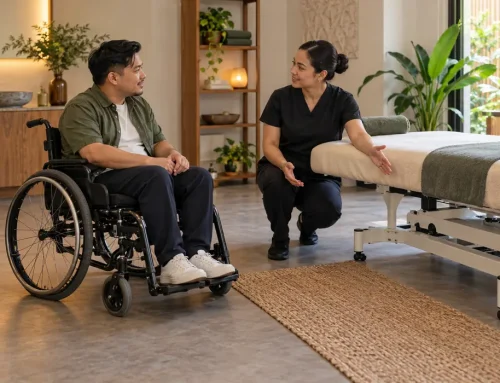
For information about Wellnessville’s nonsexual massage appointments, review the massage services and therapist information. Contact Wellnessville to clarify the service scope before booking.
Key Takeaways
- A label is not a medical qualification or a guarantee of effectiveness.
- Separate cultural context, personal experience, sexual activity, and clinical healthcare.
- Consent must remain specific, voluntary, and ongoing.
- Seek appropriate clinical advice for symptoms rather than relying on a dramatic wellness claim.
Frequently Asked Questions
Does a traditional sounding name establish a medical qualification?
No. A term, cultural reference, or personal account does not establish professional credentials or authority to diagnose a condition. Evaluate a health claim separately from its wording, and discuss a medical concern with a suitably qualified clinician rather than treating a familiar label as evidence.
Does widespread online use make a term standardized?
No. A phrase can appear frequently while referring to different activities or ideas. Look for a precise explanation within the particular discussion. Popularity does not settle clinical meaning, establish professional standards, or provide evidence that a health claim is correct.
Is a personal experience the same as research evidence?
No. A personal account describes one experience, while research uses defined methods to investigate a question. Both can be discussed honestly, but they answer different questions. A meaningful experience should not be converted into a guarantee about treatment of a condition.
Can I ask a clinician to explain a term privately?
Yes. You can ask how confidentiality works and request a private discussion of a concern. Describe the question in words that feel comfortable to you. The clinician can explain what is relevant to assessment without assuming that encountering a term means you have participated in an activity.
Does a cultural origin settle a legal question?
No. Historical context and present legal requirements are separate subjects. A particular situation depends on the applicable rules and facts. Seek current advice from an appropriately qualified legal professional when a specific legal decision matters rather than relying on an origin story or an online label.





Leave A Comment