A massage during menopause may feel comfortable at the start and suddenly far too warm halfway through. Plan for changes you can make quickly: a lighter top layer, permission to sit up, and a simple way to ask for cooler air. You needn’t predict exactly when a hot flash will arrive or disclose personal details to request a cooler room.
Separate warmth from coverage
A heavy blanket can provide privacy and still be the wrong choice for temperature. Ask whether an opaque, lightweight sheet can stay in place while a blanket is removed. Decide who will move the layer. That small detail is particularly useful when you are lying face down and cannot see which cover is being lifted. The guide to sensory-friendly massage offers other ways to make changes more predictable.
A cooler session without giving up privacy
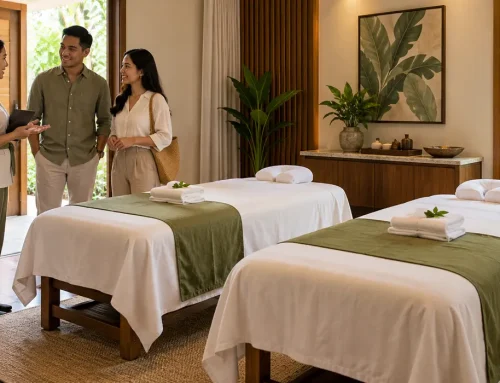
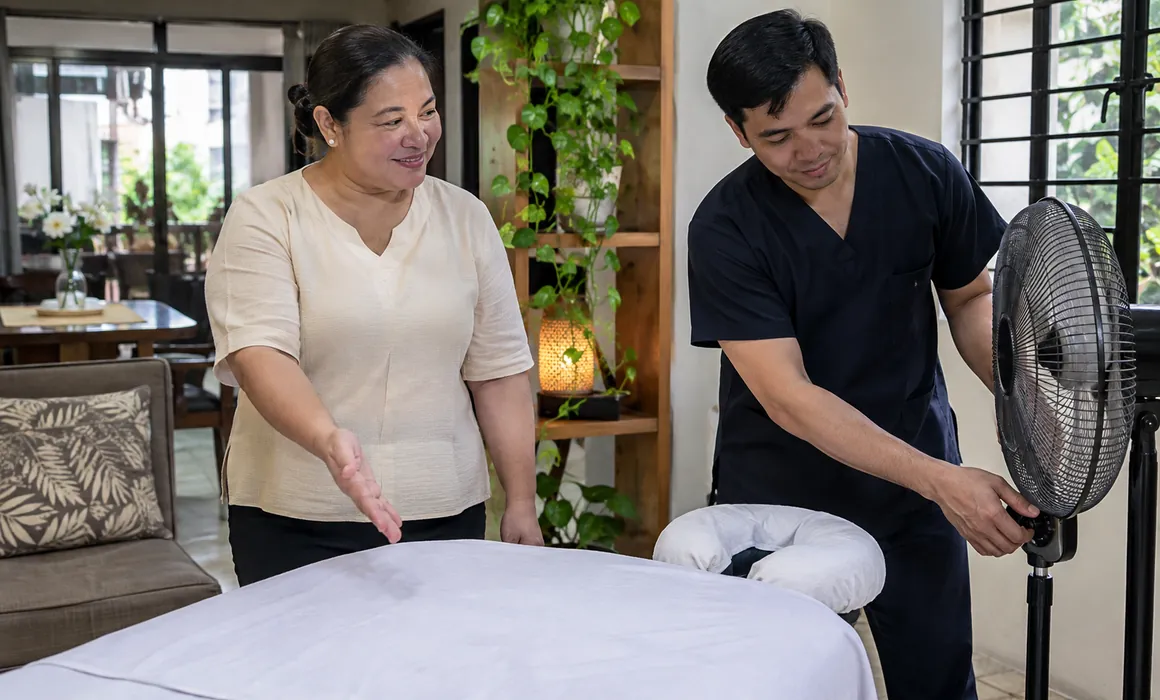
A client asks reception to make the room cold because she had a hot flash halfway through her last visit. This time the room feels too cool at the start. What she actually wanted was the option to change quickly. A light opaque sheet, a separate blanket within reach, and a fan that can be switched on or off give her more control than choosing one room temperature for an entire hour.
- Can we agree that a raised hand means pause before lifting any layer? We can stop, ask which change you want, and keep coverage secure while we adjust the blanket or airflow.
- Where will the fan point when it comes on? We can turn it away from your face first and let you choose whether direct air feels welcome.
- If I arrive already overheated, can I sit for a few minutes before deciding? Ask how arrival time is handled, where you can wait comfortably, and whether the room can be checked before treatment begins.
A shared room can complicate thermostat decisions. The second recipient may want a warmer blanket while you want moving air. A movable fan or separate top layers can sometimes meet those preferences together. When the only control changes the whole room, find out in advance whether a separate space is available before booking a joint visit.
Use the morning of the appointment as a fresh decision
When you book several days ahead, you are describing the day you expect to have. On the actual day, ask whether the important conditions still hold. A health change can alter medical suitability. A room change can alter practical comfort. A person who is simply exhausted may no longer want the service at all. These are different reasons for changing a booking, and each deserves a straightforward response.
Poor sleep after a night with symptoms can shift your priorities. On one day you may enjoy social conversation before the visit; on another the same conversation may feel like another demand. Ask for less talking or a quieter waiting place if that would help, and consult your clinician about continuing disruptive symptoms.
Where a gift, deposit, or group arrangement is involved, remember that practical consequences and health decisions are separate. The organizer can discuss payment or transfers while the recipient decides what is appropriate. You don’t need to make a medical guess just to keep someone else’s schedule intact.
Build in the option to pause midstroke
Imagine that your face starts to feel hot while a therapist is working on your back. You may want all contact to stop while you sit up, or you may simply want a fan turned on. These requests are different. Agree on a brief phrase for each one. A fan aimed directly at damp skin may become unpleasant when the heat passes, so keep its control or the person operating it within reach. Try an ordinary room-temperature towel before choosing anything heated.
What a useful preference note looks like between hot flashes
Many intake forms ask whether you prefer a warm or cool room. If neither answer is always right, write what can change. For example, a client might ask to begin with ordinary room temperature, keep a light cover available, and have a direct route to a seat if she wants a pause. That note remains usable even on a day without a hot flash. It avoids scheduling a permanently cold room that feels unpleasant between episodes.
Consider practical details after the visit as well. A short wait in a crowded lobby may matter more to you than the thermostat in the treatment room. Check where you can change, whether there is a quieter place to sit, and how you will contact your ride. If menopause symptoms are affecting your sleep, mood, or usual activities, those concerns also deserve a separate clinical conversation about the options available to you.
Check how the room feels from the table
Check the effects of any change on communication. A fan may solve a heat problem but make speech harder to hear. Closing curtains may soften glare yet leave too little light to see a practitioner’s face. Work through the preferences one at a time. If you share the room, ask whether a local adjustment or separate top layer can accommodate both people.
One fan across a small room can be a welcome option at the beginning of a hot flash and an unpleasant draft a few minutes later. If possible, choose a position where turning the fan away is enough to change the sensation. This can be easier than adjusting a whole-building thermostat in a shared branch or hotel.
You can revise the plan as the visit goes on. A comfortable starting point is a choice for the first few minutes, not a commitment to stay in the same conditions. Agree on a signal that will bring the practitioner back into a conversation if the room stops working for you.
Choose the time by your own pattern
If certain times of day tend to be easier, use that knowledge as a scheduling preference. A busy commute followed by a stifling waiting room can matter more than the massage technique. Ask if you can arrive a few minutes before the start and sit without rushing. The NHS overview of menopause symptoms describes hot flashes and sleep changes. Ongoing symptoms that disrupt daily life are worth discussing with a healthcare professional; a massage booking does not address the medical options.
Choose what to change when the heat comes on
| When this comes up | What to ask or do | Reason |
|---|---|---|
| Heavy top blanket | Request a lighter outer layer while an opaque sheet stays in position. | Temperature and privacy can be addressed independently. |
| Warm air at the face | Try repositioning airflow rather than immediately changing the whole room. | You can control a local discomfort while keeping the rest of the body comfortable. |
| A sudden flash of heat | Agree that a pause can mean no hands-on contact while you sit or cool down. | Moving the blanket alone may not provide the break you actually want. |
| Cooling afterward | Keep a separate dry cover within reach. | What felt oppressive moments earlier may feel welcome once damp skin meets moving air. |
Separate room temperature from heat applied to the body
Warming a room, adding a blanket, switching on a heated table, and applying a warm item directly to skin are different choices. One can be welcome while another feels uncomfortable or is inappropriate for medical reasons. Ask which sources of warmth are in use before you lie down. You may discover that switching one of them off is all that is needed.
A client who asks for cooler conditions may still want the security of a sheet across the chest or legs. Think in layers: privacy comes from the base layer, while temperature can be adjusted with a removable top cover. Heated tables, stones, and warm face towels are separate decisions rather than things you must accept as a set.
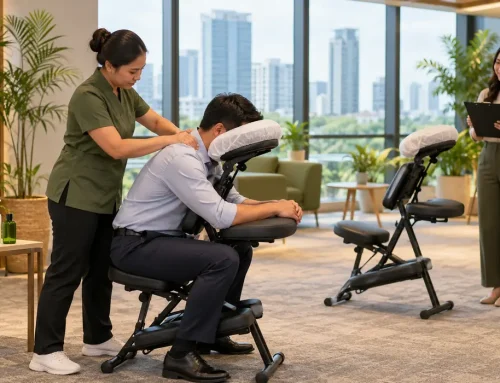
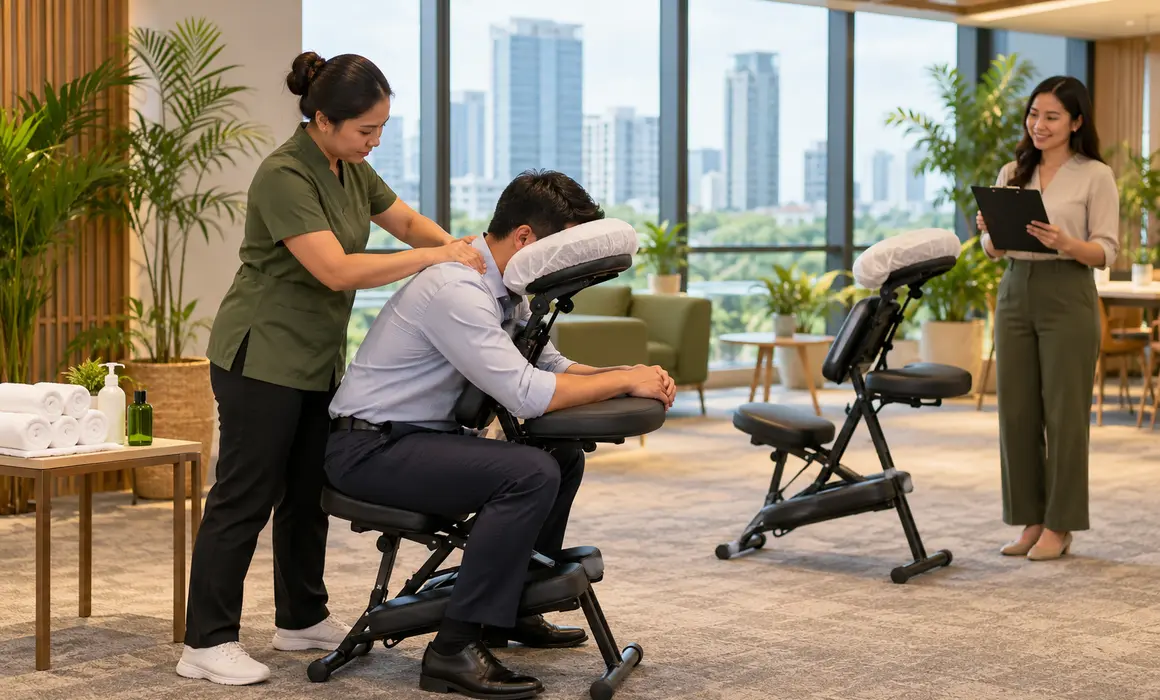
During an ordinary relaxation visit, keep the means to change the arrangement accessible. Someone can reach a fan switch, remove a top layer, or pause contact without disturbing privacy. Knowing who will act on a request is more useful than agreeing that the room should be generally comfortable.
Decide what to carry forward to a different practitioner
Ask whether the provider can record the practical preference in your booking and whether it will be available at a different branch or during a home visit. Even when a note exists, restate any important medical restriction directly. Old notes may retain a preference or treatment detail that no longer applies after a change in health or comfort.
A permanent note saying “cold room” might not suit a person whose temperature preference changes from minute to minute. A more useful record describes the available control: light sheet first, no automatically heated items, and a pause before adding or removing layers. It leaves next week’s preferences open while preserving what helped last time.
You may decide not to keep a permanent record of something personal. Tell the current practitioner what they need to know for this visit and keep your own reminder if you prefer. A useful handover preserves the relevant instruction without requiring you to share the entire story behind it.
Give your therapist one or two instructions they can act on
“I want a light cover and no heated table” is enough. You can add “Please ask before changing the room temperature” if cold air bothers you too. You may make entirely different choices next time. If fragrance becomes overwhelming with heat, the fragrance-free massage guide helps you check the whole room. Ask about cooling options through the Wellnessville booking page before reserving a particular location.
Work backward from the next activity that matters
A rehearsal, a ride home, a night shift, or an afternoon with family can change what you want from an appointment. Put that activity on the calendar first. Then allow for the time you will actually spend traveling, changing, and getting settled. A short service can occupy much more of the day than its stated length suggests, especially when a road journey or a building entrance is unpredictable.
Work out where the hottest part of the outing usually occurs. It may be a jeepney transfer, a long walk from parking, or the sunny side of a waiting room. Changing the time of day or allowing a pause on arrival can make the experience easier even if the actual treatment room already feels comfortable.
You do not need a perfectly empty day. You need an honest picture of what happens next. Telling the therapist you have to do fine hand work, drive, or leave by a particular time gives the provider a better starting point than a vague request to feel completely refreshed.
Wording for a cooler room and secure coverage
I may need to cool down during my appointment. Could we use a light opaque sheet with a separate removable blanket, leave off heated items, and agree on a quick pause if I need the room adjusted?
You can describe the arrangement without mentioning menopause if you prefer. For a home appointment, locate the fan or air conditioner control before the therapist arrives. In a branch room, find out whether the control affects just that room or a larger shared area, since that changes what adjustments are realistic.
Frequently Asked Questions
Does menopause automatically rule out massage oils?
No. Discuss your own allergies and skin changes and check the ingredients of the specific product.
Should I remove a hormone patch for massage?
Leave prescribed patches in place unless your prescriber or pharmacist directs otherwise. Point out the area and keep it clear of rubbing and heat.
Can a massage confirm that night sweats are caused by menopause?
No. Bring new, drenching, or unexplained sweats to a clinician, especially if you also feel unwell.
What if I want a female therapist for this conversation?
Ask the provider about practitioner availability and whether your preference can be confirmed when you book.
Can I bring a change of shirt for after the session?
Yes. Ask where you can change privately and keep the spare shirt dry in your own bag.