















Massage With Diabetes: Foot Sensation, Devices, and Appointment Planning
A massage with diabetes should reflect how diabetes affects you personally. Some people have normal sensation and intact skin. Others have nerve damage, circulation problems, a foot ulcer, or a device that needs protection. Tell the practitioner about the factors that change touch, heat, positioning, or access to your diabetes supplies. Follow your diabetes team’s advice about whether the visit and any foot work are suitable.
Do not use pressure as a test of sensation
Numbness can make it harder to notice that a towel is too hot or a thumb is pressing too firmly. Being able to tolerate a sensation is not proof that the skin underneath is safe. Ask for heat and vigorous foot work to be omitted when sensation is reduced, and consult your foot-care team before considering direct work on vulnerable feet. The CDC guide to diabetes and foot health explains why daily inspection and prompt attention to changes matter.
How socks, towels, and a footrest can affect the plan
When a foot needs protection, the conversation should include what happens before and after foot contact. Does anyone expect you to stand barefoot on a wet floor? Would a strap, footrest edge, or seam press against the skin? Can you keep protective footwear on for a seated service elsewhere on the body if that is part of your usual routine? Your diabetes foot-care team can guide individual restrictions.
Ask the provider to respect any existing foot-care plan without improvising a scrub, a hot soak, or callus removal as a favor. These are additional procedures with their own risks. A well-planned hand or shoulder visit may be quite different from a foot service. The purpose of discussing diabetes is to identify which practical arrangements matter to you, not to assign the same set of assumptions to every person with the condition.
Separate room temperature from heat applied to the body
A person with reduced sensation may not be able to judge heat accurately. Do not use a test of what someone can bear as evidence that a heated item is safe. When sensation, skin integrity, or circulation is a concern, avoid direct heat on the affected area and ask the appropriate clinician about personal restrictions. The provider can still discuss a comfortable ambient environment.
A person who can judge a warm towel easily with a hand may still have reduced protective sensation in a foot. Skip heat on affected areas and follow the advice of your foot-care team. A therapist should not use your ability to tolerate one region as a test for another.
During an ordinary relaxation visit, keep the means to change the arrangement accessible. Someone can reach a fan switch, remove a top layer, or pause contact without disturbing privacy. Knowing who will act on a request is more useful than agreeing that the room should be generally comfortable.
Protect equipment from pressure, pulling, and products
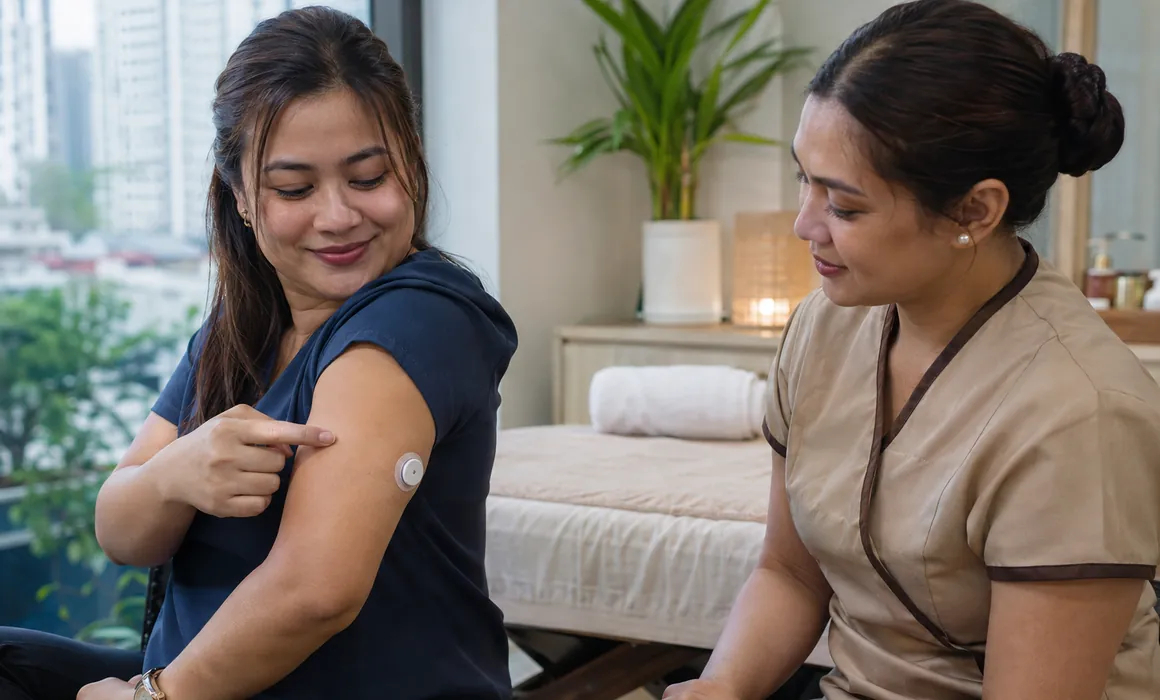
Point out the location of a glucose sensor, pump, tubing, or infusion site through your clothes. State where a sheet, pillow, or therapist’s arm must not press. Keep your reader or phone alerts accessible if they are part of your routine. Do not disconnect a device or change insulin delivery for a spa visit unless following your own treatment instructions. A position that keeps the equipment clear is often a simpler choice.
Keep four parts of a diabetes plan within reach
| Situation | What to do | Why it matters |
|---|---|---|
| Sense of touch | Tell the provider about areas where pressure or temperature may be hard to judge. | Feedback alone can be unreliable when protective sensation is diminished. |
| Devices | Show the position of the equipment over clothing and check what will rest against it. | A pillow, arm, or table edge can press on a device even when the therapist avoids touching it. |
| Usual supplies | Choose a clean, reachable place before you lie down. | A needed item across a room may be technically present but unavailable when it matters. |
| New skin changes | Bring foot wounds or concerning changes to your care team promptly. | A foot massage cannot substitute for a diabetes foot assessment. |
Protect a device in every position you will use
Choose a place for accessories before the room gets busy. A personal case, controller, or phone can stay accessible without being on a damp towel or in the therapist’s work area. Decide whether an alert needs to remain audible or visible, and how you will pause if you need to respond. Device management stays with the person who normally handles it unless they request appropriate assistance.
A sensor on the back of the upper arm can be in plain view at intake and hidden under your weight once you rest on that side. A pump or tubing may meet the edge of a support instead. Check the position and reachability of your own equipment yourself and manage it according to your diabetes plan.
If the only way to receive the advertised service would be to move or disconnect something you have been told to leave alone, stop and revisit the plan. A different position, a different region, or a different day may fit your needs without compromising the equipment.
Keep your usual diabetes plan accessible
Choose a time and setting that fit your ordinary meals, medicines, and glucose monitoring. Keep any supplies you normally use to treat a low within reach and tell the therapist that a device alert means pause. If you develop symptoms or a reading that calls for action, stop the session and follow your individual diabetes plan. Seek urgent help when indicated. A massage therapist should not advise on dosing or reinterpret your glucose reading.
Keeping a glucose alert within reach
A client usually places her phone across the room during a massage. Today it receives her glucose sensor alerts. A kitchen counter out of reach is suddenly a poor storage spot, and silencing the phone would interfere with the plan she follows for diabetes. She chooses a clean chair within reach of the treatment area, agrees on a pause if an alert sounds, and makes sure her supplies stay beside the same chair rather than in a bag near the door.
- Could we choose a position that leaves my sensor and tubing clear? We can look at where supports and sheets will fall, without touching or moving your device.
- What should happen when my reader gives an alert? We can stop contact and give you time and access to follow your own care plan.
- What if a foot change appears on the morning of a booked foot session? Contact your diabetes or foot-care team promptly for advice. A booking can be changed while the foot is assessed.
One device can solve one problem and create another practical one. A sensor on the back of the upper arm may be clear when you sit and pressed against the table when you lie on your side. Check the actual position before anyone starts work. You can stay fully dressed for this trial and indicate the area without letting another person handle the device.
Pick a clean landing place for small belongings
Before you settle, decide where anything small or delicate will go. A folded towel looks convenient until it is picked up for laundering. A dark chair can hide a black hearing aid case, hair clip, or camera tether. Choose a closed pouch or hard case you control and a stable spot that will remain accessible throughout the visit.
Fast-acting carbohydrate or another item in your usual low-glucose plan needs to be where you can actually reach it. Putting everything neatly on a high shelf across the room may defeat that purpose. Identify the supplies that must stay near you and which bag you can safely put away.
Separate items you need during the appointment from those you only need afterward. A medical device controller or communication aid should remain usable. A watch or piece of jewelry may be better secured in your own bag. A wallet at the bottom of that bag can stay there until payment. This arrangement keeps you from asking someone else to search through personal belongings at an awkward moment.
Know which person can answer the unresolved question
Reception can usually tell you who is scheduled, how long a room is held, and what equipment is available. The practitioner can explain the movements they use, their training, and how they would adapt the proposed appointment. The clinician who knows your health situation can address medical suitability. One friendly person may be willing to answer everything, but willingness alone does not give them the information each decision needs.
If an alarm sounds, let the person who uses the glucose device manage the reading and follow their established plan. The practitioner’s role is to stop, make supplies accessible, support privacy, and obtain emergency help if needed. Advice about insulin doses, equipment settings, or a new foot problem belongs to the diabetes team.
Write down the question that remains open rather than repeatedly starting the whole conversation from scratch. You may have all the scheduling details and still need clinical advice, or have clinical guidance and still need an equipment measurement. Resolve the open item with the person who can verify it.
Use a different body region when feet need medical attention
A new blister, break in the skin, unexpected warmth, discoloration, or a change in foot shape needs attention from your diabetes care team. A spa foot service does not diagnose the cause. Check the foot massage guide for what a menu can include, and the guide to postponing a visit for how to explain a change. Contact Wellnessville in advance to ask whether the provider can follow specific restrictions.
Look at the skin that will bear weight or friction
A part of the body can receive pressure without being selected for massage. Think about where you sit, where a limb rests, and what happens when you put a sleeve or shoe back on. If an area of skin needs protection, keep it clear of those indirect contacts as well as the practitioner’s hands. Describe the boundary in a way that works while you are fully clothed.
Before considering a foot service, note whether a shoe or sock has left a blister, sore, or area that looks different from usual. Contact your diabetes foot-care team about new or concerning findings. A spa therapist should not try to test sensation by applying deeper pressure to the area that feels numb.
A new open area, bleeding, unexpected spreading redness, drainage, or worsening pain calls for appropriate medical attention. A provider should not apply an unfamiliar product to investigate what a skin change might be. If a medical dressing or prescribed skin treatment is in place, leave its management to you and your healthcare team rather than changing it for convenience during a spa visit.
Wording for a visit that keeps diabetes supplies accessible
I use a glucose sensor and need my reader and usual supplies within reach. I will manage the device myself. Could we check that nothing rests on the sensor, leave out heated towels, and agree to pause immediately if I need to follow my diabetes plan?
Add any individual guidance about foot contact or other areas. A general massage provider can confirm what it will exclude and where belongings can stay. Clinical questions about a new skin change, glucose management, or an adjustment to equipment belong with the appropriate diabetes professional.
Frequently Asked Questions
Can I check a glucose reading in private at a venue?
Ask for a clean, private space before traveling, especially if you need a sink, a seat, or room for supplies.
Should used lancets go loose into my bag after the visit?
No. Use the sharps container and disposal process recommended by your diabetes team or local healthcare service.
Should I lend the therapist my lancing device so they can check a reading?
No. Manage personal testing supplies according to your usual plan. Lancing devices are for individual use.
Can I keep medical ID jewelry on?
Yes. Explain that it needs to stay on and arrange contact around it.
Should I ask the therapist to calibrate my glucose sensor?
No. Follow the instructions for your specific device and ask your diabetes team or the manufacturer if calibration is needed.
Try Our Massage Packages
Some of Our Massage Therapists